From “Godzilla” to Green Tech: How Nissan Keeps Reinventing the Road
When you think of Nissan, what comes to mind? For some, it’s the raw, asphalt-shredding power of the GT-R. For others, it’s a reliable Rogue handles the morning school run, or the silent hum of a LEAF cruising through downtown.
The truth is, Nissan has always been a bit of a shapeshifter. For over 90 years, the Japanese automaker has built a reputation on a simple philosophy: “Do what others dare not.”
Let’s take a quick drive through how a company that started under the name “Datsun” became one of the most versatile giants on the global market—and where it’s heading next.
1. The Heritage: The Datsun Roots
Before Nissan was Nissan, it was Nihon Sangyo (a holding company founded in 1928). If you take the first syllables of those two words—Ni–San—you get the name we know today.
But for decades, global drivers knew their cars as Datsun. From the incredibly elegant Datsun 240Z of the 1970s—which proved that sports cars could be both reliable and affordable—to tough little compacts that survived the global fuel crises, Nissan built its foundation on clever engineering that didn’t break the bank.
2. The Legends: NISMO and “Godzilla”
You can’t talk about Nissan without talking about its performance alter-ego: NISMO (Nissan Motorsport).
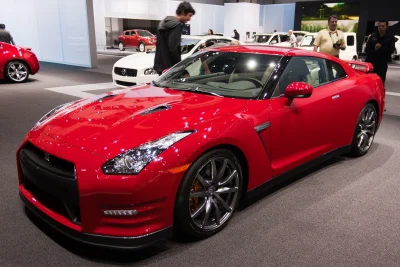
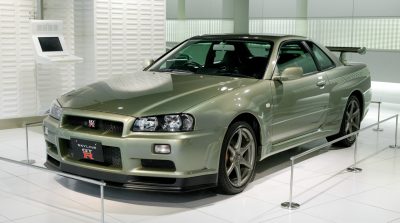
In 1989, Nissan unleashed the Skyline GT-R (R32) onto the racing world. It dominated the Australian Touring Car Championship so thoroughly that local journalists gave it a nickname that stuck forever: Godzilla.
The modern R35 GT-R and the sleek, nostalgic Nissan Z carry that torch today. They are living proof that even while building everyday family haulers, Nissan’s engineers still know how to build machines that make your heart race.
3. The Future: e-POWER and the EV Revolution
Nissan was arguably a decade ahead of the curve when it launched the Nissan LEAF back in 2010, effectively pioneering the modern, mass-market electric vehicle (EV).
Today, the lineup is expanding with the striking Ariya crossover, but Nissan is also leaning heavily into a brilliant bridge technology called e-POWER.
How e-POWER works: Unlike standard hybrids where the engine and electric motor both turn the wheels, e-POWER uses a traditional gas engine solely as a generator to charge a battery. The wheels themselves are driven 100% of the time by an electric motor.
The result? You get the instant torque, smooth acceleration, and quiet ride of an EV, but you fill it up at a gas pump. It’s a massive hit in markets like Japan and Europe, giving drivers the EV experience without the charging anxiety.
The Verdict: Why Nissan Matters
Nissan has had its share of ups and downs, but its willingness to take risks is what makes it fascinating. Whether it’s preserving the legacy of internal combustion sports cars or designing bi-directional charging that allows your future car battery to power your home during a blackout, Nissan refuses to play it safe.
The next time you see that silver badge on the road, remember: you’re looking at a lineage that spans from lightweight 1930s roadsters to high-tech electric crossovers.